
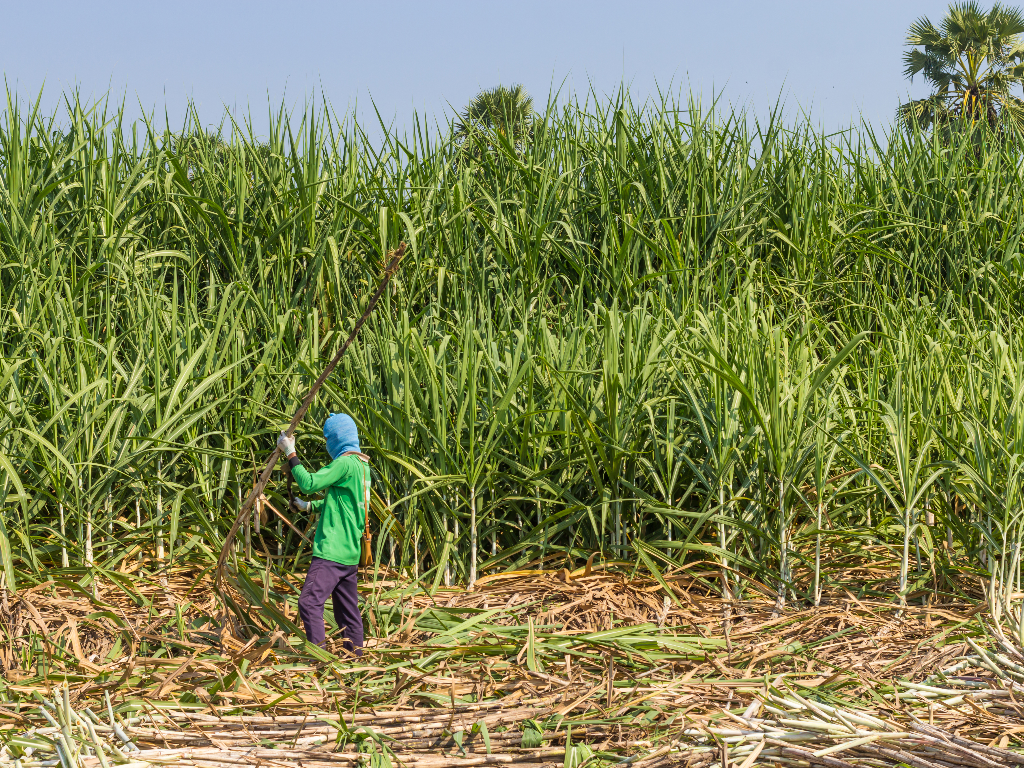
There is a compelling need to incentivize, sensitize, promote and encourage voluntary land consolidation and cooperative farming models in Kenya’s sugar industry. Across the country, generational subdivision, population growth and inheritance traditions have steadily and surely reduced farm sizes over time. Even though these practices are culturally legitimate and socially embedded, they have eroded the economic viability of sugarcane farms in the sugar growing counties.
Land in our country is not only a productive asset among individuals, but it also represents identity, dignity and family continuity. Any attempts, therefore, to restrict subdivision through law would be politically sensitive and socially disruptive; communities will obviously not be receptive. Reform must therefore be incentive-driven and not coercive. The strategic question is not how to stop fragmentation by regulation but rather how to reward scale and stability so that consolidation becomes economically attractive to all sector players.
Grounding this conversation in empirical reality strengthens the case for reform even further.
The Structural Reality
Nationally, sugarcane occupies over 280,000 hectares of land, which is more than enough to sufficiently feed the industry with sugarcane. Additionally, the country’s 16 operating mills collectively have an installed crushing capacity exceeding 50,000 tonnes of cane per day. However, despite the significant installed milling capacity and area under sugarcane farming, the sugar industry operates below its potential. This is seen in the case where the country's actual mill utilization averages only about 56% of the 50,000-tonne capacity. This low mill throughput cannot be blamed on factory problems alone, as it also reflects the inconsistent cane supply, delayed harvesting and farm-level inefficiencies that are closely linked to land fragmentation. Given the land acreage, stoppages for cane accumulation and forceful shutdowns due to a lack of enough mature cane for milling should be a thing of the past, yet these remain persistent issues within the industry.
Moreover, smallholder farmers dominate the cane growing sector in Kenya, with an estimate of 93% of Kenya’s sugarcane being produced by over 300,000 smallholder farmers, unlike in other world economies where the crop- cultivation is practiced on massive parcels, with good examples including but not limited to; Eswatini, Brazil, Mauritius and South Africa. In many areas of our beloved country, individual plots range from 0.3 to 1.2 hectares, often below the threshold required for economically viable mechanization.
These figures clearly illustrate that we have sufficient land under cane and adequate installed processing capacity, but fragmentation at the farm level constrains productivity, raises costs and destabilizes supply chains, leading to the absurd underperformance being experienced today.
Fragmentation and Its Economic Consequences
What was once a viable cane block has today been frequently subdivided over time into multiple plots, each too small to support efficient operations. This fragmentation creates cascading challenges including:
- Low yields per hectare
- High production costs per unit/hectare
- Limited mechanization
- Weak bargaining power for farmers
- Unstable cane supply for mills
- Restriction in planning and increased logistical cost
Small and irregular plots complicate effective and coordinated planting, harvesting and cane haulage. These in turn increase transport costs and often lead to delayed harvesting, resulting in a reduction in sucrose content and eventually hampering the factory recovery rates. The result is a system in which both farmers and millers struggle, despite working within a sector that has significant potential. This calls for a structured incentive as a solution to this problem.
Voluntary Land Consolidation
Voluntary land consolidation offers a culturally accepted and economically sound pathway forward, as families and neighbouring homesteads will retain their individual title deeds but pool adjoining parcels for joint cultivation. Ownership will remain intact as the operational scale increases.
This approach reconciles two realities. First, land must remain within families according to inheritance traditions and second, agriculture must adapt to modern efficiency requirements.
When operational units expand through voluntary pooling, farmers can: Reduce per tonne production costs, improve coordination of agronomic practices, enhance yields, increase logistical efficiencies and factory recovery rates and strengthen farmers’ bargaining power. Scale does not require surrendering land. It just requires organizing the land differently.
Cooperative Farming as a Practical Vehicle
Cooperative arrangements will formalize joint cultivation and provide structure for pooled farming. Through organized collaboration and notes comparison, farmers can effectively synchronize planting and harvesting schedules, standardize fertilizer application and share other important resources like irrigation systems and soil management practices.
Mechanization becomes economically viable when land is aggregated into larger blocks. This helps reduce reliance on manual labour only, shortens harvesting gaps and minimizes and/or eliminates the post-harvest sucrose deterioration through cane staling and over-ripening. In principle, cooperative farming transforms fragmented subsistence production into coordinated commercial farming.
Policy Levers That Reward Scale without Coercion
The role of the Kenya Sugar Board is central in this case. Reform must be built around incentives that align farmer behaviour with sugar sector productivity goals.
1. Input Subsidies Linked to Minimum Viable Farm Size
One of the most direct and viable incentive available is a well-structured farm inputs support that could be pegged on farm size thresholds. These can include but not limited to fertilizer subsidies, certified seed cane distribution, irrigation support where applicable and proper extension services that are attached on farm size thresholds.
Rather than denying support to smallholders, the Board could introduce priority benefits for consolidated holdings above a minimum viable size, for example, say 5ha land size and above, to be given such and such incentives, below which no priority benefits are offered. This threshold would not prohibit smaller plots from operating, but it would create clear economic advantages for pooled acreage.
In practice, this might include:
- Higher subsidy percentages for fertilizer and seed cane
- Guaranteed early access to subsidized inputs during planting windows
- Dedicated agronomic extension officers for consolidated clusters
The message would be simple and clear: scale reduces cost per tonne and improves factory recovery rates. Public support should therefore reward productive scale. This will encourage voluntary land pooling under cooperative or contractual arrangements so that they too can enjoy the benefits associated with large scale farming.
2. Preferential Access to Mechanization Services
Mechanization is perhaps the most visible casualty of fragmentation in the country. Small irregular plots make the use of harvesters and planters uneconomical. This promotes over-reliance on manual labour, delays in harvesting and thus a reduction in sucrose content due to poor timing.
The Board could structure mechanization support around consolidated acreage by:
- Creating regional mechanization hubs so that farmers can see and appreciate the concept of mechanization on the ground
- Prioritizing consolidated plots for subsidized planting and harvesting services
- Offering discounted tractor services for land preparation on pooled blocks
Where smallholders form legally recognized land consolidation agreements, they would move to the front of the queue for mechanized services.
This approach does not force farmers to merge titles, but ensures that efficiency in services flows towards organized and scale-ready production systems.
3. Higher Eligibility Scoring Under the Sugar Development Fund
The Sugar Development Fund is currently the most strategic financial lever in the industry, access to affordable credit determines whether farmers can replant ratoons on time, invest in irrigation or improve soil fertility through soil testing and analysis.
The Kenya Sugar Board could introduce a transparent credit scoring matrix where:
- Consolidated or cooperative acreage receives a higher scoring
- Long-term land-use agreements earn additional points
- Structured production contracts with mills enhance creditworthiness
This model would not exclude individual farmers. Instead, it would reward collective action and stability. Financial institutions partnering with the Fund would find pooled acreage less risky to invest in due to the economies of scale and shared liability frameworks.
Credit markets naturally reward lower risk. Policy design should therefore align with this logic.
4. Structured Incentives for Registered Land Consolidation Agreements
A major barrier to consolidation is trust, where farmers worry about losing control of their land or being at a disadvantage in pooled arrangements. The Board in collaboration with other authorities such as the County Governments and the National Land Commission, could address this by developing a formal registry for voluntary land consolidation agreements.
Such agreements will go a long way in:
- Preserving individual land titles
- Defining revenue-sharing mechanisms clearly
- Establishing transparent dispute-resolution frameworks
- Registering tenure duration for the various agreements (e.g. five to ten years)
Once registered, these agreements would unlock incentive packages such as:
- Priority access to irrigation infrastructure
- Guaranteed milling contracts
- Reduced administrative fees
The Board’s role would not be to take land but to validate and protect cooperative arrangements and by reducing legal uncertainty, consolidation becomes safer and more attractive.
5. Tax or Levy Rebates Linked to Long-Term Land-Use Stability
Cane farming is a long-cycle investment. Frequent subdivision and crop switching undermine long-term investment, proper soil management practices and mill supply planning.
The Board, in collaboration with other fiscal authorities, could introduce:
- Levy rebates for farms under stable and long-term cane production agreements
- Reduced Cess rates for consolidated acreages
- Introduce tax incentives for formally registered cooperative farming organizations
These fiscal nudges would promote predictability, mills will benefit from a stable cane supply and farmers would benefit from lower statutory costs. The sector benefits from reduced volatility.
6. Embedding Incentives in Performance-Based Policy Frameworks
To avoid elite capture or unintended exclusion, the incentive system must be transparent and performance-based. Consolidation should be tied not only to size but also to:
- Yield per hectare benchmarks
- Timely delivery compliance
- Efficient and proper soil and water management practices
This will ensure that scale alone does not become the direct instrument for incentives and that productive scale is the goal, not just land accumulation.
Why Incentive-Based Reform Is Politically and Economically Viable
Restrictive subdivision laws would likely provoke resistance across sugar-growing counties because they would be considered an intrusion and interference from the traditional norms and customs of most communities. However, rewarding scale shifts the narrative as farmers remain free to operate as they choose, but the economic dynamics change. When larger operational units consistently receive:
- Better input pricing
- Faster and improved harvesting services
- Improved credit access
- Lower levies
Fragmentation becomes economically costly rather than legally prohibited.
This is behavioural economics applied to agricultural policy, as it recognizes that farmers respond to incentives and not threats and coercions.
Anticipated Risks and Safeguards
The incentive-bound approach must guard the industry against unintended consequences such as:
- Elite land accumulation at the expense of vulnerable households
- Informal coercion within communities by politicians and the elites in society
- Gender bias and/or exclusion in pooled arrangements
Safeguards should therefore include:
- Caps on subsidy concentration
- Mandatory inclusion clauses for registered cooperatives
- Transparent and fair monitoring frameworks
Because the objective here is not corporate consolidation but cooperative efficiency.
Conclusion: Making Productivity More Attractive Than Fragmentation
As we have seen from the industry data aforementioned, the Kenyan sugar sector does not suffer from a lack of land or installed milling capacity. It suffers a great deal from the structural inefficiencies rooted in fragmentation. The solution is not about controlling land through restrictive laws, but aligning incentives so that farmers voluntarily choose cooperation farming because it makes economic sense.
The Kenya Sugar Board can therefore promote and enhance consolidation of neighboring sugarcane fields without encountering political backlash by embedding structured, transparent and performance-linked incentives. Through this, farmers are able to retain land ownership, communities and individuals preserve their inheritance traditions and mills still receive a more stable sugarcane supply at the same time. The industry becomes more competitive and resilient. A win for all sugar sector players.
When larger operational units consistently receive better input pricing, faster mechanization services, improved credit access and lower statutory costs, fragmentation becomes economically costly rather than legally prohibited.
That is how structural reforms succeed. Not through confrontation but through alignment.