
By Etherly Barasa
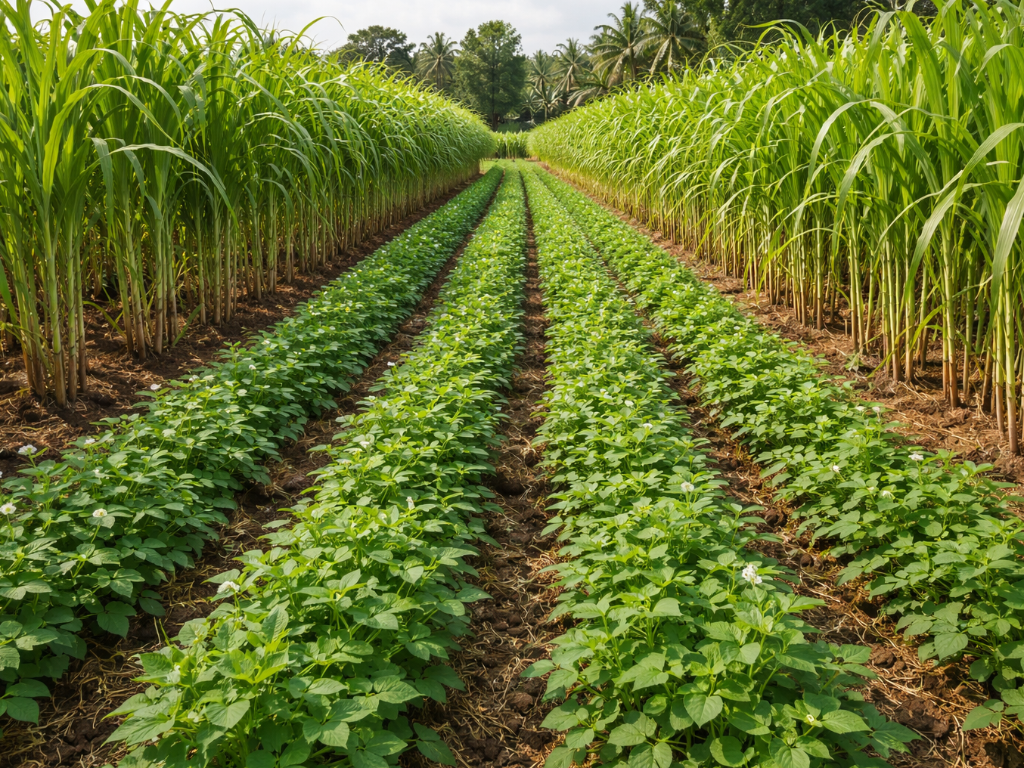
Sugarcane is a crop that typically remains in the field for 12–18 months before harvest. During this long period, especially in the early stages of growth, the spaces between the cane rows are often underutilized. Recently, more farmers have begun intercropping sugarcane with legumes such as beans, soybeans, cowpeas and groundnuts. This technique offers multiple benefits to both the soil and the sugarcane crop, many of which farmers may not even be fully aware of.
Let’s explore how intercropping sugarcane with legumes enhances soil health and crop productivity.
What is intercropping?
Intercropping is the agricultural practice of growing two or more crops on the same field at the same time. In sugarcane farming, legumes are the ideal intercrop because they are short-seasoned, improve soil health, and do not compete with cane during its early growth stages.
Why Legumes are Ideal Intercrops for Sugarcane
Leguminous crops have a unique ability to form a symbiotic relationship with nitrogen-fixing bacteria in their root nodules. These bacteria convert atmospheric nitrogen into a form that plants can use. When intercropped with sugarcane, legumes provide several important benefits:
- Fix atmospheric nitrogen into the soil:
Legumes like soybeans are excellent nitrogen fixers. This naturally reduces the need for synthetic nitrogen-based fertilizers and enhances overall soil fertility. - Improve soil organic matter:
As legume roots and above-ground biomass decompose, they add organic matter to the soil. Their roots also help break up compacted soils and reduce erosion, contributing to improved soil structure. - Suppress weeds effectively:
In the early stages of sugarcane development, wide spacing between rows allows weeds to thrive. Legume intercrops quickly cover the ground, shading out weeds and reducing the need for herbicides. They also help protect the soil from erosion and disrupt pest cycles common in monoculture cane farming. - Provide food or fodder and generate extra income:
Many legumes such as beans, soy and groundnuts can be harvested as food or sold for additional income. This offers a financial boost to farmers during the long sugarcane growth cycle.
A Sustainable Farming Practice
While the best choice of legume intercrop depends on factors like rainfall, soil type and market access, intercropping is not just about maximizing yields. It also supports sustainability by:
- Improving soil health for future crops
- Reducing dependency on chemical inputs
- Supporting climate-smart agriculture
- Minimizing nitrogen runoff and building soil resilience
Conclusion
Intercropping sugarcane with legumes is a smart, sustainable farming technique that offers economic, agronomic and environmental benefits. It turns unused space into a productive zone, enhances soil fertility, reduces input costs and contributes to a more resilient farming system.